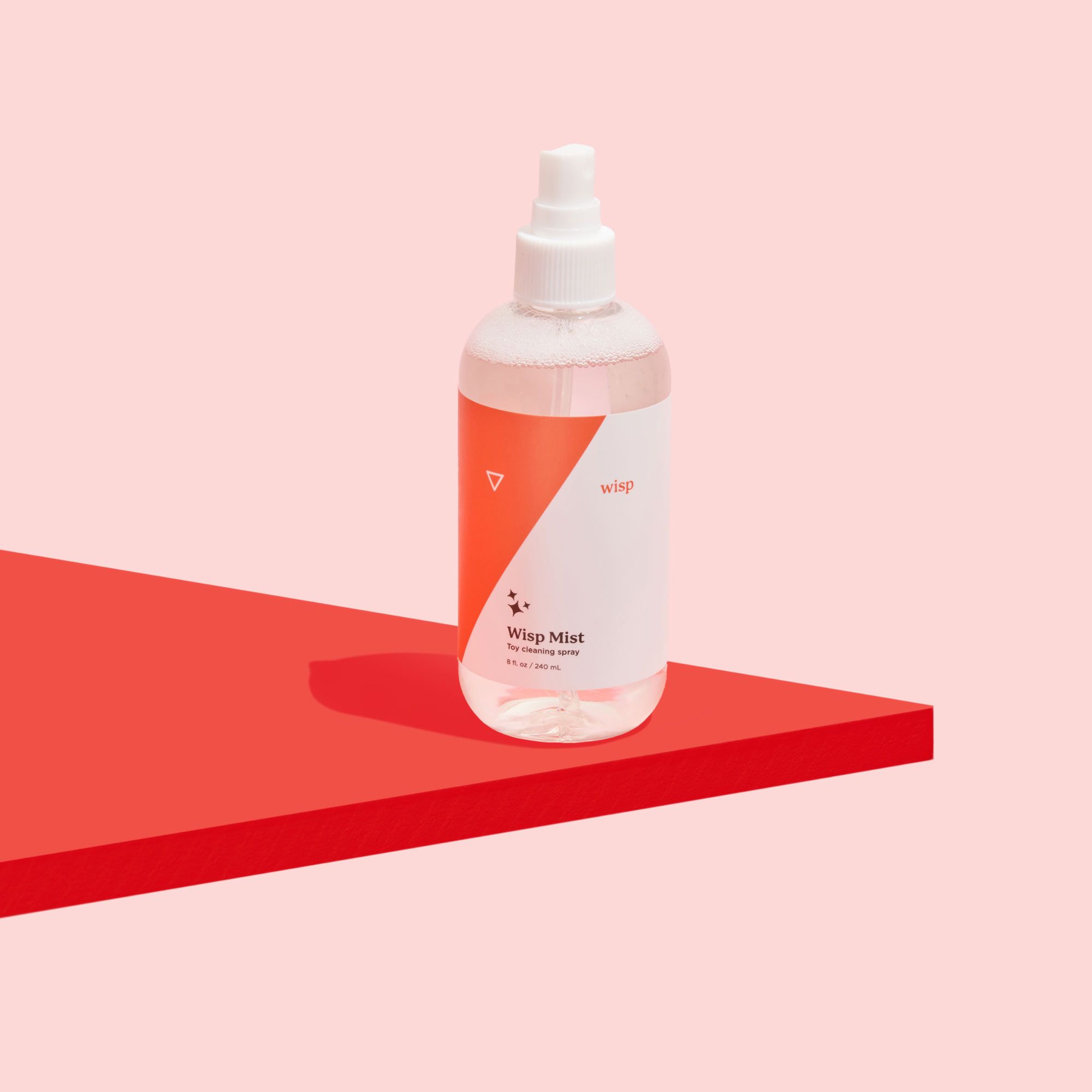
Wisp Mist Toy Cleaning Spray
$15.00
In this sex-ed wiki article, we will explore Sterilisation and Cleaning in the context of sex toys and intimate accessories. You will learn the difference between cleaning and sterilising, which methods work for which materials, how to store your products correctly between uses, and why getting this right is one of the most important things you can do for your intimate health.


Cleaning and sterilisation are related but distinct processes, and confusing them leads to hygiene gaps that matter for your health. Cleaning removes visible dirt, bodily fluids, lubricant residue, and surface bacteria from a product using soap, water, or a dedicated cleaner. It significantly reduces the bacterial load on the surface but does not guarantee that all pathogens have been eliminated. Sterilisation goes a step further, reducing microbial presence to a level at which no viable organisms remain. A sterilised toy is as hygienically clean as it is possible for that product to be.
The reason this distinction matters is that only certain materials can be sterilised at all. Non-porous materials such as silicone, glass, and stainless steel can be fully sterilised because their structure has no internal channels for bacteria to hide in. Everything that contacts the surface stays on the surface and can be completely removed. Porous materials such as TPE, TPR, jelly rubber, and PVC absorb bacteria into the material itself, where cleaning methods cannot reach. For porous toys, surface cleaning is the only option regardless of how diligently it is done.
For a full explanation of why this matters and which materials fall into each category, see our dedicated articles on Porous Materials, Non-Porous Materials, and our overview guide Porous vs Non-Porous Materials.
There is one rule that applies to every sex toy and intimate accessory regardless of material, and that is to clean it after every use without exception. Bacteria multiply rapidly at body temperature, and a toy put away without cleaning after use will harbour significantly more bacteria by the time it is used again. This is true even for non-porous toys, where surface bacteria from a previous use remain active until removed. Building a consistent post-use cleaning habit is the single most effective step you can take for sex toy hygiene, and it takes less than two minutes with the right method for the material.
Boiling is the most practical home sterilisation method for non-porous sex toys without electronic components. Submerging a toy in boiling water for five to ten minutes kills all common bacteria, viruses, and fungi effectively. It is free, requires no specialist equipment, and works reliably every time. This method is appropriate for non-vibrating silicone, medical grade silicone, stainless steel, glass, borosilicate glass, titanium, and glazed ceramic and porcelain products. Never boil any toy with a motor, battery, or electronic component, even if the product claims to be waterproof. Waterproof ratings refer to water resistance during use, not immersion in boiling water.
The top rack of a dishwasher run without detergent achieves sterilisation through hot water and heat for the same non-electronic, non-porous materials that can be boiled. This is a convenient option that many people use for glass dildos and solid stainless steel or titanium products. Run the cycle without detergent to avoid any residue from dishwasher chemicals remaining on the toy surface.
Warm water and a mild, unscented soap is the baseline cleaning method for every sex toy, including those that cannot be boiled. It removes surface contamination effectively on non-porous toys and is the only practical cleaning method for porous materials and for any toy with electronic components. Use your hands rather than a sponge or cloth, which can harbour their own bacteria. Rinse thoroughly to remove all soap residue, then dry completely before storage. For vibrating toys, be careful around charging ports and seams and follow the manufacturer guidance on water exposure.
Dedicated sex toy cleaning sprays, foams, and wipes use antibacterial agents formulated to be skin-safe and material-compatible. They are convenient for quick cleaning between uses, for travel, and for toys that cannot be immersed in water. They are a good supplement to soap and water but do not replace boiling for full sterilisation of non-porous toys that can tolerate heat. Always check that any cleaner is compatible with your specific toy material, as some formulations can affect silicone or rubber-based products over time. (You can explore a range of quality sex toy cleaners here)
Pre-moistened toy wipes and antibacterial sprays are useful for quick cleaning of external vibrators, handles, controls, and accessory items that are not inserted. They are not a substitute for thorough cleaning of insertable products but serve a practical purpose for accessories, packaging, and quick surface refreshing between full cleans.
For porous sex toys that cannot be sterilised, using a condom is the most effective practical hygiene measure available. A condom creates a physical barrier between the porous material and the body, preventing direct tissue contact with the toy's surface and significantly reducing the exposure to any bacteria accumulated within the material. Use a new condom for every use and for every user. This does not make a porous toy equivalent in hygiene to a non-porous alternative, but it manages the risk as effectively as is practically possible. Porous toys that are used without condoms should be replaced more frequently.
| Material | Porous | Can Be Sterilised | Best Cleaning Method | Notes |
|---|---|---|---|---|
| Medical Grade Silicone | No | Yes | Boiling / Dishwasher / Soap and water | Non-vibrating only for boiling |
| Silicone | No | Yes | Boiling / Dishwasher / Soap and water | Non-vibrating only for boiling; water-based lube only |
| Stainless Steel | No | Yes | Boiling / Dishwasher / Soap and water | All lube types compatible |
| Glass Borosilicate | No | Yes | Boiling / Dishwasher / Soap and water | All lube types compatible; inspect for chips before use |
| Glass | No | Yes | Boiling / Dishwasher / Soap and water | All lube types compatible; inspect for chips before use |
| Titanium | No | Yes | Boiling / Dishwasher / Soap and water | All lube types compatible |
| Ceramic (glazed) | No | Yes | Boiling / Dishwasher / Soap and water | Inspect glaze before every use |
| Porcelain (glazed) | No | Yes | Boiling / Dishwasher / Soap and water | Inspect glaze before every use |
| ABS Plastic | No | Partial | Soap and water / Sex toy cleaner | Cannot boil; thorough surface cleaning achievable |
| Polypropylene | No | Partial | Soap and water / Sex toy cleaner | Cannot boil; thorough surface cleaning achievable |
| Aluminium | No | Partial | Soap and water / Sex toy cleaner | Cannot boil; wipe with soft cloth |
| Gold | No | Partial | Soap and water / Soft cloth | Sterling silver: do not boil; pure gold: soap and water sufficient |
| Platinum | No | Yes | Soap and water / Soft cloth | Chemically stable; very easy to maintain |
| Silver | No | Partial | Soap and water / Silver polishing cloth | Do not boil sterling silver; dry thoroughly to prevent tarnish |
| TPE | Yes | No | Soap and water | Use condom; replace regularly |
| TPR | Yes | No | Soap and water | Use condom; replace regularly |
| CyberSkin | Yes | No | Gentle soap and water; cornstarch after drying | Use condom; handle gently to avoid tearing |
| Biofeel | Yes | No | Soap and water | Use condom; replace when sticky |
| Biolene | Yes | No | Soap and water | Use condom; replace when sticky |
| Synthetic Skin | Yes | No | Soap and water | Use condom; replace regularly |
| Jelly Rubber | Yes | No | Soap and water (limited) | Replace with body-safe alternative; use condom if keeping |
| PVC | Yes | No | Soap and water (limited) | Replace with body-safe alternative; use condom if keeping |
| Rubber | Yes | No | Soap and water (limited) | Replace with body-safe alternative |
| Latex | Yes | No | Mild soap and water | Use condom; water-based lube only |
| Wood (sealed) | Low-Moderate | No | Wipe with damp cloth only | Do not submerge; inspect seal regularly |
| Stone | Varies | No | Warm water and mild soap; soft cloth | Do not boil; inspect for chips before use |
| Crystals | Varies | No | Warm water and mild soap; soft cloth | Do not boil; avoid prolonged water exposure for softer types |
| Resin | No (if fully cured) | Partial | Soap and water; soft cloth | Do not boil; inspect for tacky surface before use |
The lubricant you use during play directly affects how a toy needs to be cleaned and what happens to the material over time. Silicone and Medical Grade Silicone should only be used with water-based lubricants, as silicone-based lubricants can degrade the surface of silicone products over repeated use. Glass, stainless steel, and titanium are compatible with all lubricant types including water-based, silicone-based, and oil-based, making them the most versatile materials from a lubricant standpoint. Oil-based lubricants break down latex and most rubber-based materials rapidly and should never be used with these products. TPE and TPR should only be used with water-based lubricants. Regardless of lubricant type, all residue must be cleaned off thoroughly after use since any lubricant left on or in a toy provides a growth medium for bacteria during storage.
For non-porous toys without electronics, the most thorough cleaning method is boiling. Bring a pot of water to a full boil, lower the toy in using tongs, and leave it submerged for five to ten minutes. Remove, allow to cool completely, and dry with a clean lint-free cloth before storage. For non-porous toys with electronics or vibrating components, wash thoroughly with warm water and a small amount of mild unscented soap, paying attention to any texture, ridges, or seams where residue can collect. Rinse completely, taking care around buttons and charging ports unless the product is rated fully waterproof. Dry thoroughly with a clean cloth and air dry completely before storing. For porous toys, follow the same soap and water process but understand that this achieves surface cleaning only. Dry completely before storage and consider using a condom at next use.
Cleaning a toy and then storing it while still damp is one of the most common hygiene mistakes. Moisture in an enclosed storage environment creates exactly the conditions bacteria and mould need to grow. Always ensure a toy is completely dry before putting it away. Air drying on a clean surface after wiping down with a lint-free cloth is ideal. Avoid using fluffy towels which can leave fibres on the toy surface.
Storage matters as much as cleaning. Most sex toys come with a storage pouch, and these exist for good reason. A pouch protects the toy from dust, airborne bacteria, and contact with other surfaces between uses. Store pouches in a clean, dry drawer or box. Wash the pouches themselves periodically as they accumulate bacteria over time just as the toys do. Never store multiple toys loose together in a single bag without individual wrapping, as different materials can react with each other. Silicone toys stored in contact with other silicone toys can bond over time, and rubber products can degrade silicone through chemical transfer. Keep products separated.
Vibrating toys with rechargeable batteries need extra care around water exposure. Even waterproof-rated vibrators should not be boiled. Clean with soap and water or a dedicated cleaner, following manufacturer guidance carefully on water depth and exposure time. Always charge fully and dry the charging port completely before connecting the charger.
BDSM and bondage accessories such as leather cuffs, paddles, and restraints cannot be submerged. Wipe leather items with a damp cloth and mild soap, dry thoroughly, and apply a leather conditioner regularly to maintain the material and prevent cracking. Metal hardware on leather accessories can be cleaned separately with soap and water or a metal cleaner. Rope bondage accessories, particularly hemp and cotton rope, should be hand washed and air dried completely before storage and inspected regularly for wear.
Sex furniture and positioning accessories with foam or memory foam cores cannot be cleaned themselves and rely entirely on their removable covers for hygiene. Wash covers after every use and ensure the foam core is kept dry at all times.
Sterilisation and cleaning practices sit at the heart of responsible sex toy ownership. For those who own premium non-porous products in silicone, glass, or stainless steel, the good news is that thorough cleaning and periodic sterilisation are straightforward and effective, and these materials genuinely reward the care put into them with long, hygienic useful lives. For those who own porous products in TPE, TPR, or older materials, understanding the limitations of surface-only cleaning and taking practical steps like condom use and regular replacement makes a meaningful difference to intimate health outcomes. For anyone considering a new purchase, the cleaning and sterilisation implications of material choice are one of the strongest practical arguments for investing in non-porous materials from the start. A silicone or glass toy that can be boiled clean after every use and last for years is not just better for hygiene; it is better value over time and better for the environment than cheaper porous alternatives that need replacing every year or two.
Proper sterilisation and cleaning of sex toys is one of the most practical and important aspects of intimate health. The key principles are simple: clean after every use without exception, use the right method for the specific material, and understand the fundamental difference between non-porous materials that can be fully sterilised and porous materials where surface cleaning is the limit. Non-porous materials including silicone, glass, stainless steel, and titanium can be boiled or dishwashed for complete sterilisation and are the hygienically superior choice for all insertable products. Porous materials including TPE, TPR, jelly rubber, and PVC require surface cleaning and condom use as the practical hygiene management approach. Drying completely before storage and storing in clean, individual pouches completes the hygiene routine. For the best long-term intimate health outcomes, choosing non-porous materials, cleaning consistently, and replacing toys when they show signs of degradation are the three most impactful practices available.
If you would like to go deeper on why keeping your sex toys clean is so important for your intimate health, our lifestyle blog has a dedicated article that covers the topic in a practical and straightforward way. From the risks of skipping cleaning to the habits that make a real difference, it is a great companion read to this wiki article. Read Why It's Important to Keep Your Sex Toys Always Clean on the Lushense blog.
We have found 37 similar products waiting for your discovery. To see all available products in Sex Toy Cleaners click here. Always check the product details before buying.



Want to learn more? Check out other wiki articles under Sex Toy Materials for easy-to-read intimate guides, sex-ed facts, and insights.